one of four rubbings of a Tang Nestorian monument, unknown maker from China

Artwork Overview
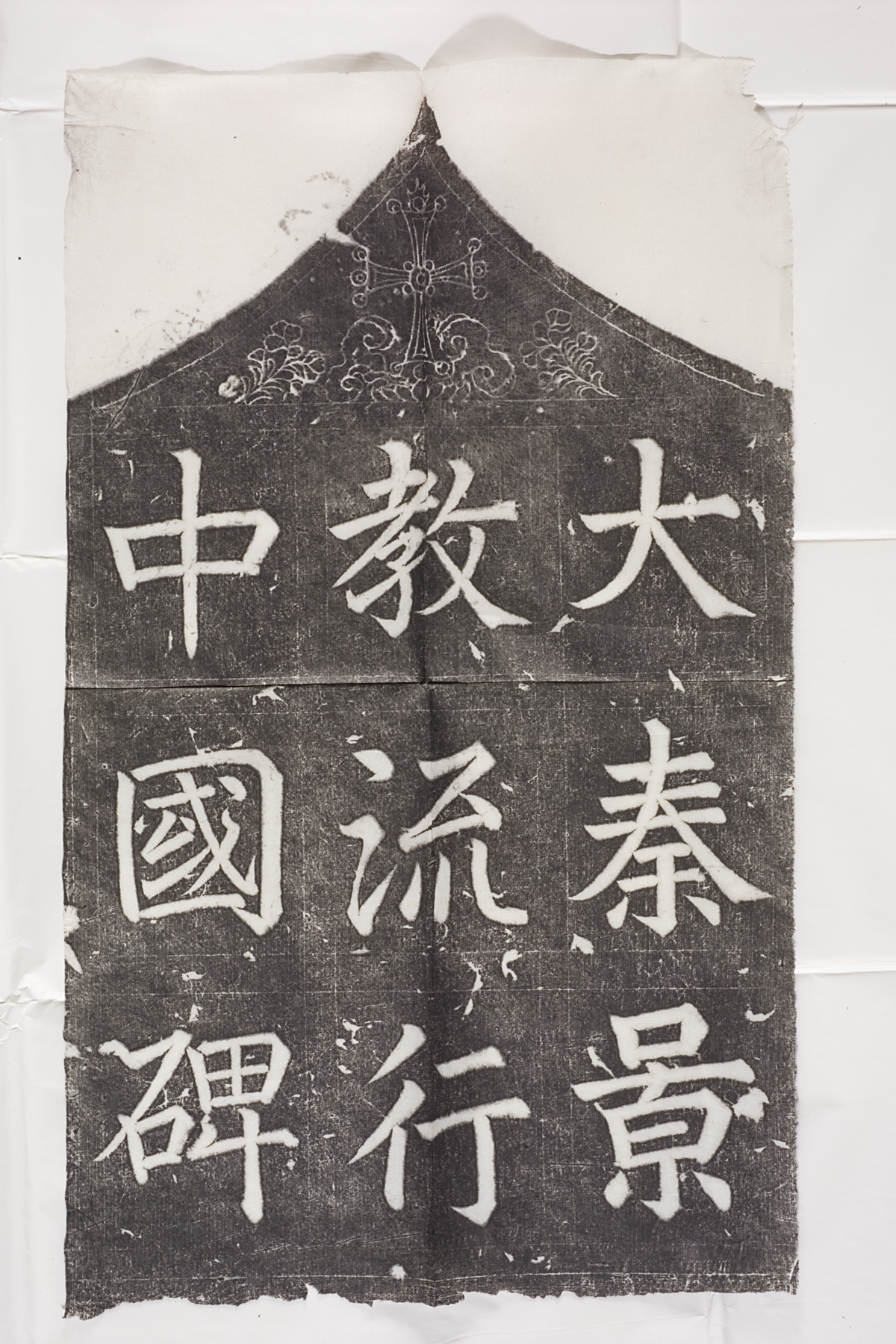
one of four rubbings of a Tang Nestorian monument , circa 781 CE
Where object was made: China
Material/technique: ink; paper; rubbing
Dimensions:
Image Dimensions Height/Width (Height x Width): 55.3 x 31.1 cm
Image Dimensions Height/Width (Height x Width): 21 3/4 x 12 1/4 in
Credit line: Gift of James R. Attleson
Accession number: 1985.0126.a
Not on display

If you wish to reproduce this image, please submit an image request

Images

Label texts

Exhibition Label:
“From the Way of Writing to the Weight of Writing," Jun-2007, Ai-lian Liu
The Nestorian Stele (also known as the “Memorial Stele of the Propagation in China of the Nestorian Church from the Roman Empire”) is one of the most important steles surviving from the eighth century not for its quality as a calligraphic work, but for its immense historical value. Dated 781, the Nestorian Stele is the earliest formal record of Christianity in China. The text is written in standard script by Lü Xiuyan and is a fine example of Tang (618-906) regular script, accompanied by a short Syriac text. The inscription summarizes the doctrine of Nestorianism, inherited from the teaching of Nestorius (381-451), Patriarch of Constantinople from 428 to 431. Nestorius’ view on the issue of Christ’s divinity was at odds with Cyril of Alexandria (378-444), and therefore he was excommunicated in 431. The Assyrian Church nevertheless continued to preach Nestorianism in Persia and Central Asia, and the doctrine eventually reached China in the seventh century. The inscription also praises the generous patronage of the Tang Imperial family. Although the imperial throne did not adapt Christianity in any capacity, its liberal attitude toward different religious and philosophical thoughts reflects the tolerance and the cosmopolitan atmosphere of the Tang Empire.

Since its rediscovery in 1623, the stele has been the subject of intense scholarly interest in both China and the West. The Stele is still extant in Xi’an, the ancient capital of the Tang Empire.