untitled (art in incarceration), Jimmy Tsutomu Mirikitani

Artwork Overview
1920–2012
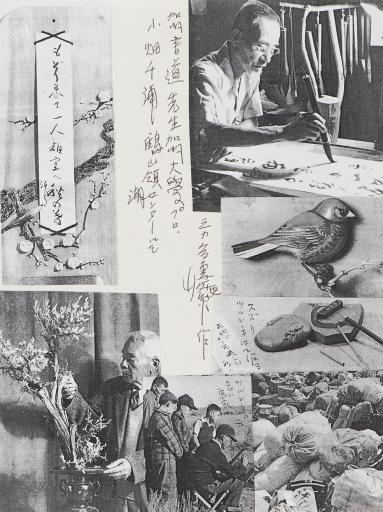
untitled (art in incarceration), date unknown
Where object was made: United States
Material/technique: collage; ballpoint pen; photocopying; paper
Dimensions:
Sheet/Paper Dimensions (Height x Width): 29 x 21.5 cm
Frame Dimensions (Height x Width x Depth): 36.2 x 28.58 x 2.54 cm
Credit line: Collection of Linda Hattendorf, Taos, New Mexico
Accession number: EL2024.132
On display: Long Ellis Gallery

If you wish to reproduce this image, please submit an image request

Images

Label texts

Street Nihonga: The Art of Jimmy Tsutomu Mirikitani

In this collage, Mirikitani reimagines scenes of artistic life within World War II incarceration camps. Drawing from Allen H. Eaton’s book Beauty Behind Barbed Wire (1952), he honors the resilience of those who transformed scarcity into beauty through art. Mirikitani’s inscriptions link him to Chiura Obata, the distinguished Californiabased Nihonga painter who founded an art school at Topaz Relocation Camp in Utah and whose luminous landscape seen in Passing Rain inspired Mirikitani. Though Obata was never at Tule Lake, Mirikitani’s identification with him—and their indirect link through Obata’s student and ink artist Masako “Kōho” Yamamoto (b. 1922)—reflects a deep sense of kinship, remembrance, and shared commitment to artistic perseverance amid adversity.

Exhibitions

Kris Ercums, curator
Maki Kaneko, curator
2026
Kris Ercums, curator
Maki Kaneko, curator
2026